


Let’s not beat around the bush. Shinobi: Art of Vengeance is a fantastic game. Originally made as an arcade game back in the late 1980s, SEGA has done a masterful job of remaking and rebranding an old franchise. While they have kept the game’s roots, they’ve also given it a modern-day twist. This game is a perfect blend of “Old Skool” toughness, combined with modern-day mechanics, visuals, and accessibility.
You play as the titular Shinobi (meaning covert operative from medieval Japan, a.k.a.: a ninja) Joe Musashi. After seeing his village destroyed, Joe wants to take his revenge on the culprits, the ENE corporation, and its mysterious leader, Ruse. Ruse also has a plan for world domination, which gets uncovered the more you get into the game.
Okay, you didn’t really come here for the story, did you? It’s not much, but you don’t need a deep Uncharted-like narrative to want to get into the hacking/slashing action. You just need an excuse to unleash the power of the Shinobi.
The game is a 2D side-scrolling hack-and-slash adventure. I always feel that 2D games are looked down on as not being triple-A worthy, but this game bucks the trend. The first thing that will hit you are the outstanding production values. To start with, this game is an absolute looker!
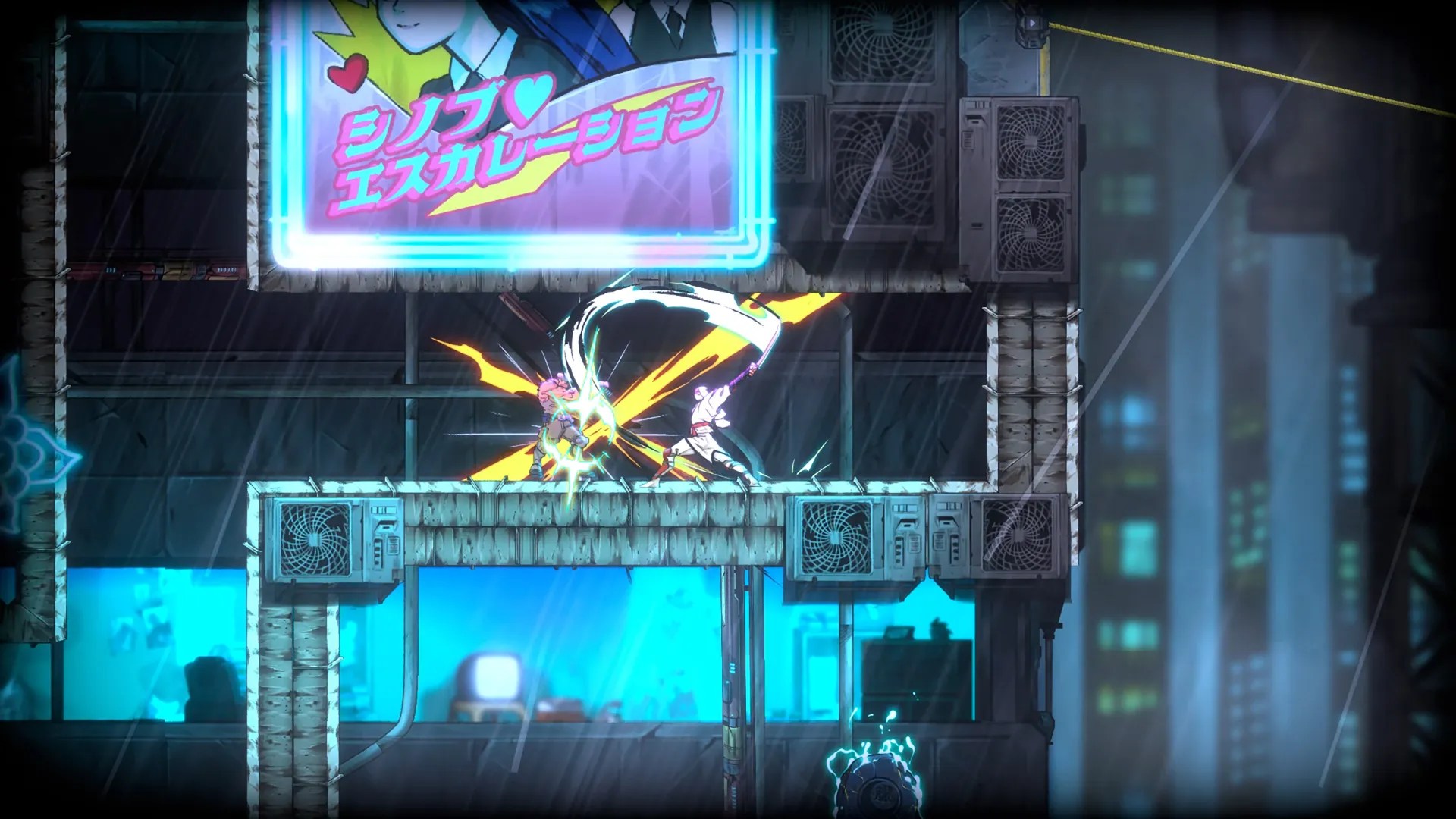
I honestly enjoyed taking the time to look at the background scene art more than the up-close action. I found I did this an awful lot over many different levels. The first chase scene through long grass is akin to the opening sequence in Ghost of Tsushima. The background of many of the levels, like the Fish Market and Neon City, held far more interest than what I was supposed to be doing. I’m seriously considering taking screenshots of some of them to print out and use as posters in my gaming room.
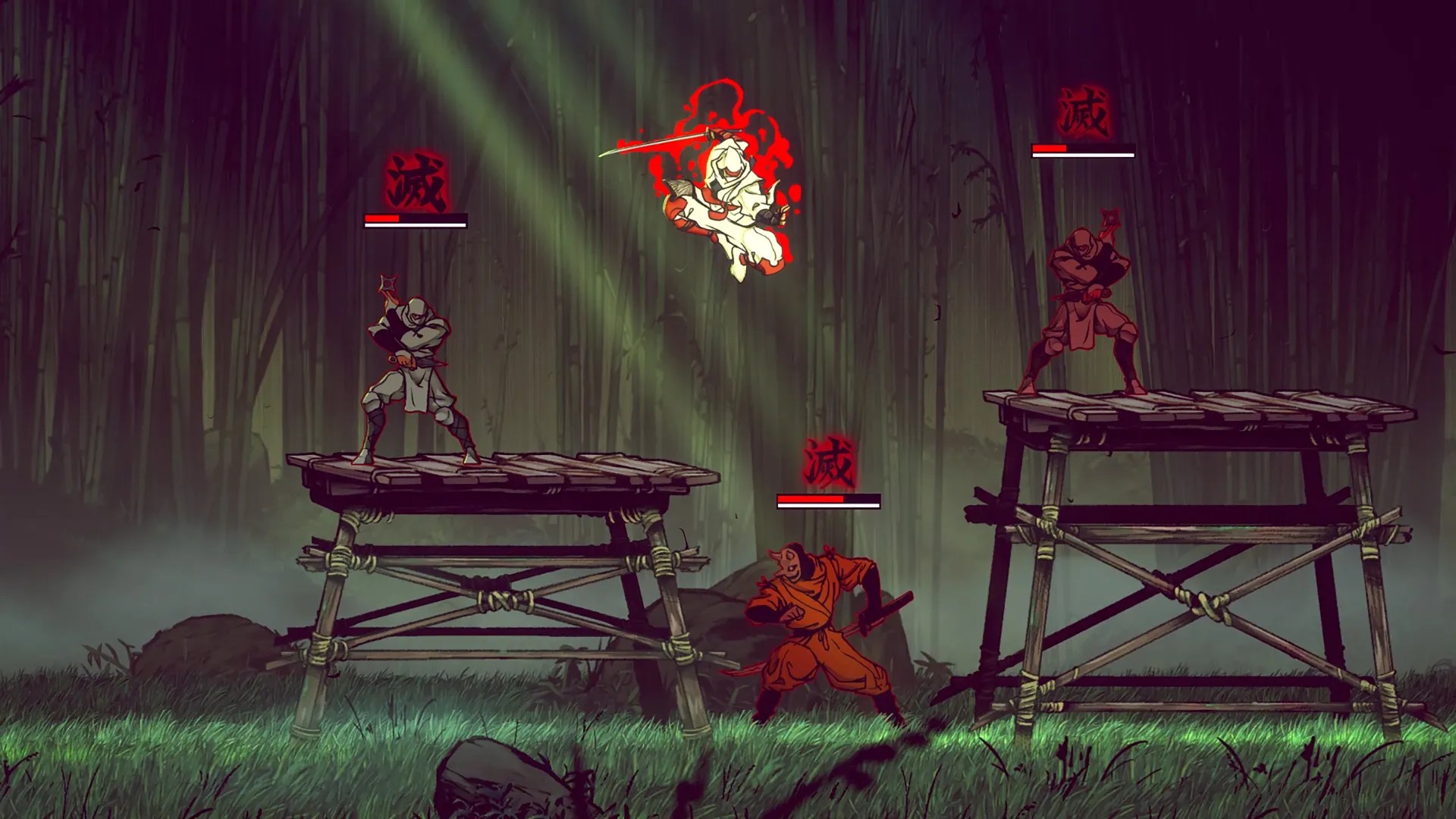
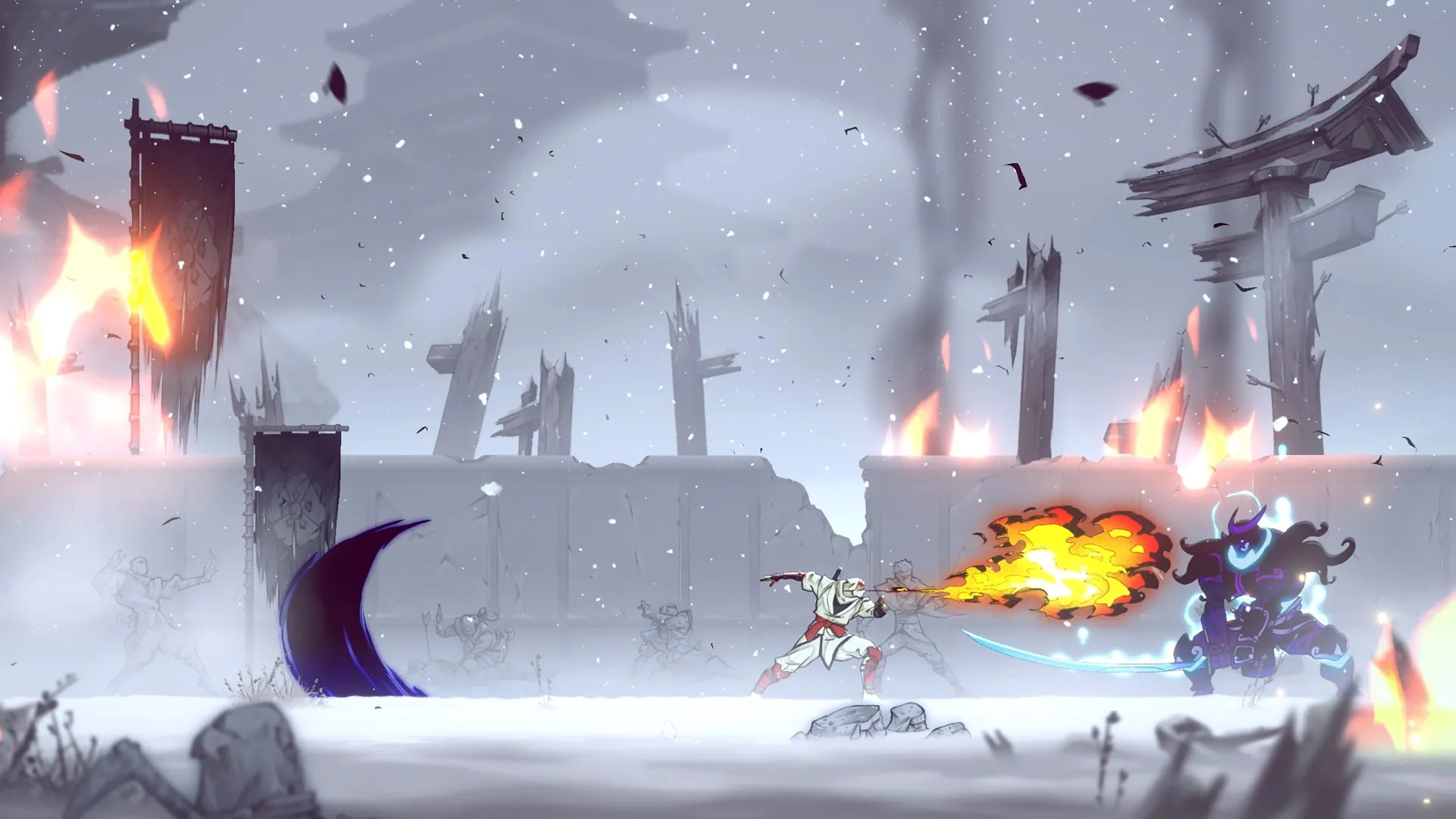
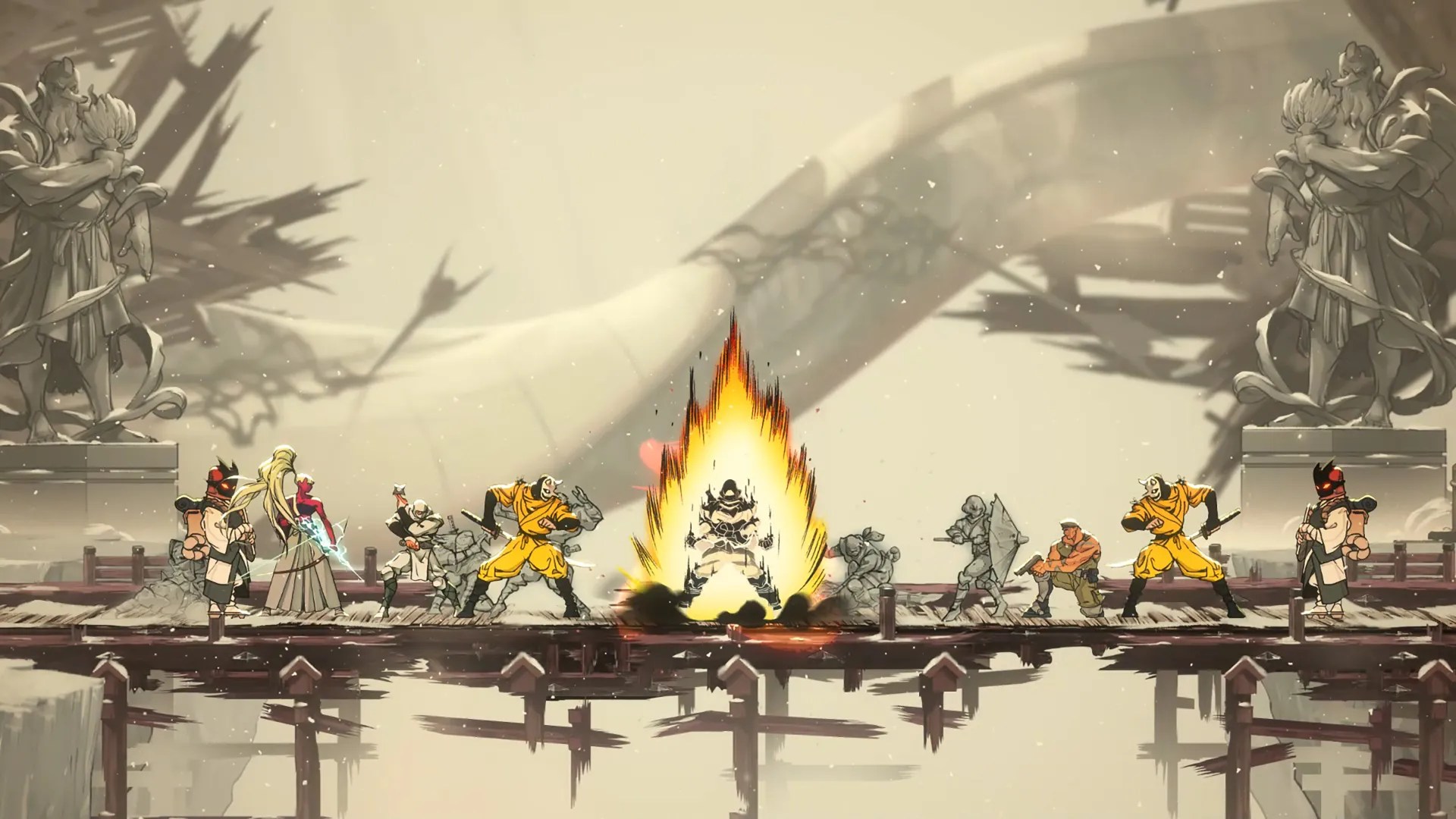
Gorgeous backgrounds aside, the action up close is equally impressive. A key point for a fast-paced hack-and-slash game is to visually be able to see where and what you are doing among the on-screen action and effects. You can do that with ease here, but you also marvel at the on-screen visual excitement. Flashing swords, enemy attacks, explosions, special skill attacks, and environmental effects. Everything is done in a fluid comic book style, but it’s animated so well and also detailed.
The crème de la crème of the effects and visuals is the ultimate, super-duper attack you can launch after building up a gauge. The screen pauses to a full-screen red and yellow power surge of a dragon erupting and blasting from Joe. It’s just AWESOME (I know I should write something a little more journalistic here, but simply saying “it’s just awesome” sums it up so well!).

This leads me to one of the other game’s standout features, the combat. As you may know, if you have read one of my previous reviews of a hack and slash game, for me, the KEY component of a good time and good mechanics is the ability for the player to express themselves on the battlefield in the way they want. You’re not hindered by awkward controls, laggy inputs, or sloppy game design. Here in Shinobi, everything is tight. VERY tight, and boy, do I love the tight, responsive controls in this game! Having such mechanics means that you, as the player, can be uber reactive to movements and things on the screen. Being able to do this means that, when you get the hang of it, you can dance around multiple enemies at once, almost like you are taunting them, kind of like a “you can’t catch me” sort of thing that then becomes “oh, by the way, here’s a huge combo I’m about to launch into your back!”. I honestly started pressing buttons instinctively during fights before even thinking about it. Combat became intuitive because of the excellent but simple game mechanics.
The other great aspect about the combat was its balance. When I describe a game as being “old skool,” to me that means limited attempts/few save points and hard but fair fights. That’s exactly what you get here. A few of the general enemies were troublesome, and sometimes it was hard to get from one save point to the next, but it’s the boss fights that really shine. Every boss fight had you, the player, go through 3 stages of discovery.
Stage 1 – I’m never going to beat that!!
Stage 2 – Nearly defeated the boss fight but didn’t read the enemy attack patterns that well.
Stage 3 – Paid attention to boss fight signals and used every moveset and weapon at my disposal to finish them off.
The beauty here is that the game is designed so that you have to eventually, at some point, use the weapon sets and moves you acquire in some way to defeat an enemy. The same familiar combo you like and use most of the time won’t cut it for everything. As everything with the controls is excellent, being pushed out of your comfort zone to use skills/abilities this way was never an issue and made the combat all the more exciting and varied. Heavy, light, charged attacks. Double jumps, jump kicks, flips to hit, throwables, skills, and a super finisher all fly off the fingers with aplomb.
To add to all this is an exciting soundtrack, each befitting the scenes and moments very well. Music is always a personal preference, but I would find it hard for anyone not to enjoy the techno, pseudo-Senguko period Japanese-inspired music here.
The in-game sound effects are also excellent, especially during combat. There was a real sense of heft and power in each swing of the sword or the unleashing of a skill. Landing a heavy attack was especially satisfying to hear as it felt like the sound alone was enough to keep an enemy from getting up again.
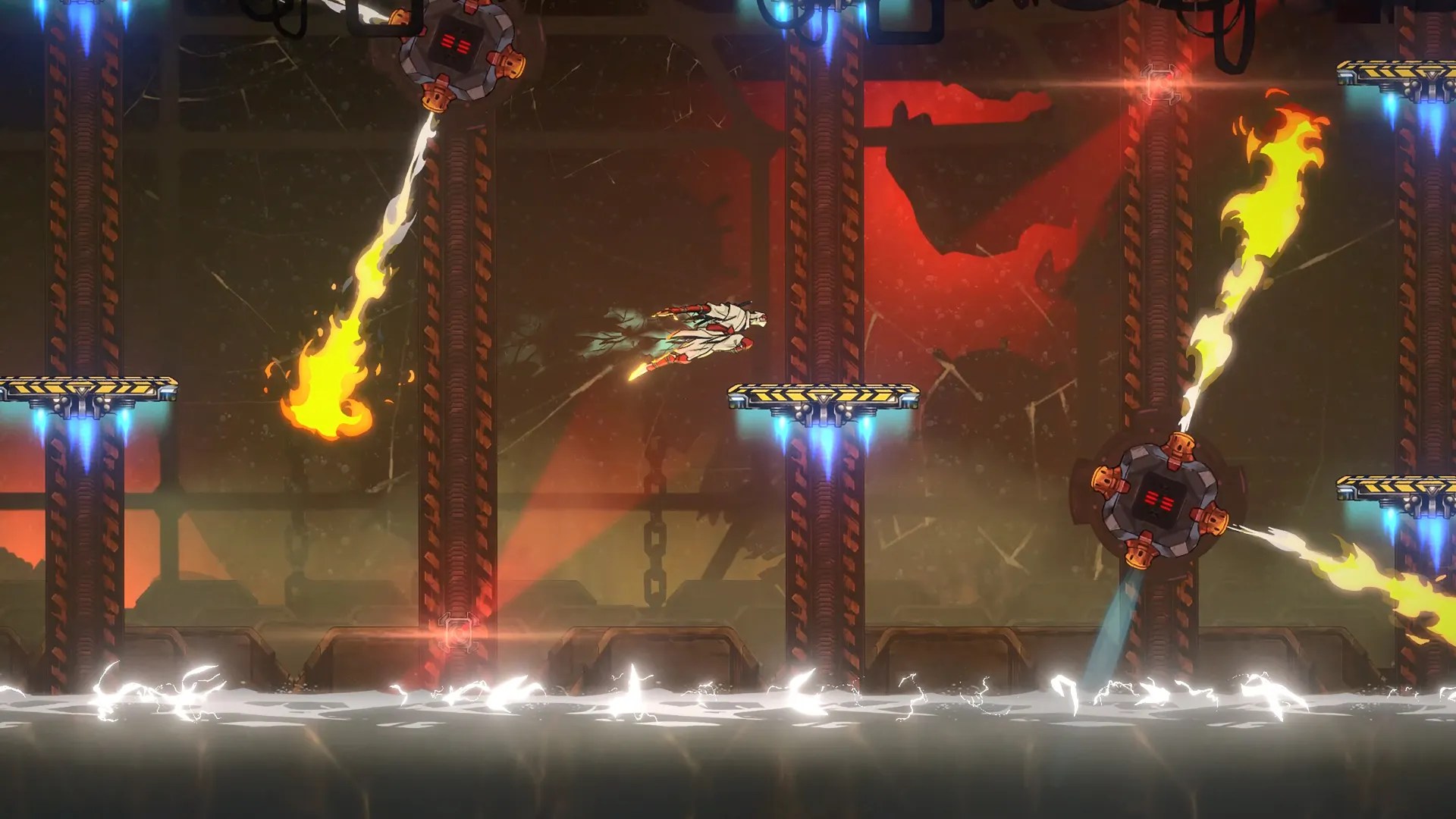
The only part of the gameplay that, for me, didn’t quite live up to the lofty heights of the combat was the platforming aspect. Platforming, like the combat, at times was overwhelming in its length and complexity, but if you take the time to study the routes and hazards, you become much more proficient. It’s very satisfying to nail what appears to be a huge leap and find you make it by your literal fingertips because you timed everything right.
My problems with the platforming were the off-screen hazards you can’t see until you are nearly on top of them. However, if you are already flying towards oblivion, you can’t do anything about it. That in itself isn’t too bad as you just learn for next time. The problem is, with scant few save points and a big chunk of health being taken for every failed leap, platforming became an exercise in health management and risk. Do I try to go for that collectible after I’ve just got this far past some really hard platforming that, if I get this next bit wrong, means I have to do it all over again? You then have a go, only to get killed by something you couldn’t land on that was off-screen when you made the jump.
I call those “cheap” deaths and find them very annoying. If you take the boss fights out of the equation, I estimate I died 70% of the time during platforming sections rather than through general combat.
My only other “niggle” was the occasional lack of help from the game in what direction to go. Most 2D platformers basically rely on the premise of just go to the right as generally the way to go. A couple of times, I got stuck thinking, “Where do I actually go from here?”. A hint or waymarker would have made such a difference and been a big help.
That, however, is probably my only criticism of the game, which says a lot about how much there is to enjoy with this one.
The main campaign will take (depending on your skill level) somewhere between 8 to 10 hours to complete. However, with new abilities, weapons, and skills to unlock as you play, it means that early sections you couldn’t access at the time are now open. So, that itch in your head says go back and have a look!
Some of the items you missed are fights or collectibles. There is a lot of replay value to be found. I managed to complete some levels with as little as 40% of them actually being explored or opened! What did I miss in the other 60%? We just have to find out!
This is made all the easier with one of the BEST design features, the save point fast travel. Simple as it sounds, what sets this apart is that no matter where you are in the game, you can instantly fast travel to a nearby save point. I used this feature a lot with collectibles. You just about reach with minimal health a collectible or a mini-boss fight. You know you won’t make the jump back, so just fast travel. I know this sounds odd to praise this system, but most other fast travel games require you to BE at a save point to travel to a new one. Not here. Anywhere is good to go.
Overall, what I have thoroughly enjoyed with Shinobi: Art of Vengeance was the power fantasy. You feel like a one-man army, fighting what appears to be insurmountable odds. The game is hard, but if you give it the respect and thought it needs to navigate and play it, then it’s perfectly fair.
Not only that, it’s very addictive. I’m nowhere near the best player of these types of games, but even after getting close to finishing other games, I’ve stuck with this for just one more session…and another…and another. I can’t get enough.
For a price point of £25 or less, this is an easy game to recommend. I’ve also been blessed to have received the deluxe version that came with an outstanding digital artbook and excellent soundtrack playlist. There will be DLC in 2026 as part of the deluxe version. I have to be honest, most art books don’t really excite me, but I’ve found that, not only have I been studying this one, I have also been putting the music soundtrack playlist on in the background while I do other things around the house.
At the end of the day, the game is brutal, violent, fast, tactical, varied, and beautiful, but most of all, very fun to play. It’s one of the best games of 2025 so far.
Summary
Shinobi: Art of Vengeance is a fantastic game. Tough as nails combat and platforming, just this side of too much, mixed with stunning visuals and a superb soundtrack and audio effects. It’s only one niggle of the “cheap platforming deaths” that bugged me too much and kept this game from being perfect.
That aside, the gameplay mechanics, design, artwork, and overall production levels raise this game to a level of must-play/must-buy for any action hack and slash fans.
Developer: Lizard Cube/Sega
Publisher: SEGA
Platform: PlayStation 4, PlayStation 5, Xbox Series X/S, Xbox One, Nintendo Switch, PC
Release Date: 29th August 2025
Gaming Respawn’s copy of Shinobi: Art of Vengeance was provided by the publisher.


